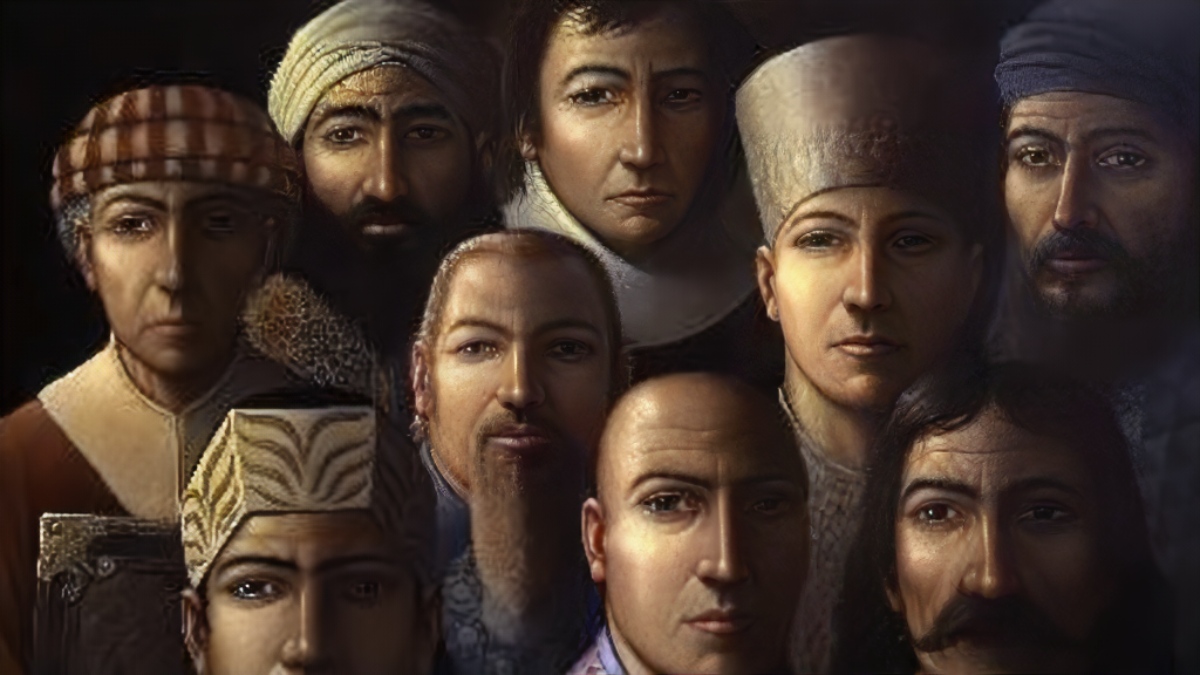
For centuries, one of the most fascinating legends associated with Emperor Ashoka has been the mysterious Nine Unknown Men, a secret society allegedly created to preserve dangerous knowledge from falling into the wrong hands. According to the legend, these nine scholars guarded books containing advanced information on subjects ranging from psychology and medicine to gravity and communication.
The legend gained worldwide popularity after British author Talbot Mundy published his 1923 novel The Nine Unknown, introducing the story to a much broader audience and inspiring decades of speculation.
But did this secret society really exist, or is it simply a compelling myth inspired by history?
While Ashoka was a real emperor who transformed the Mauryan Empire after the devastating Kalinga War, no contemporary inscriptions or historical records mention the Nine Unknown Men. Most modern historians consider the story a later literary legend, yet it continues to inspire books, documentaries, conspiracy theories, and discussions about lost ancient knowledge.
In this article, we examine the origins of the legend, the alleged nine secret books, the historical evidence, and what scholars believe today.
Contents
- 1 Who Were the Nine Unknown Men of Ashoka?
- 2 Historical Background: Emperor Ashoka and his Secret Society
- 3 The Nine Secret Books
- 4 Talbot Mundy and the Origins of the Modern Story
- 5 Historical Evidence: Did the Nine Unknown Men Really Exist?
- 6 Claims and Stories Associated with the Nine Unknown Men
- 7 Influence on Popular Culture
- 8 Conclusion
- 9 Frequently Asked Questions (FAQs)
- 10 Sources
Who Were the Nine Unknown Men of Ashoka?
The Nine Unknown Men are a legendary secret society said to have been established by Emperor Ashoka after the Kalinga War in the 3rd century BCE. According to the legend, each member guarded one of nine secret books containing advanced knowledge in fields such as medicine, communication, psychology, and warfare. Although the story became widely known after Talbot Mundy’s 1923 novel The Nine Unknown, no contemporary inscriptions or historical records from Ashoka’s reign mention the society. Most historians, therefore, regard the Nine Unknown Men as a literary legend rather than a documented historical organization.
Historical Background: Emperor Ashoka and his Secret Society
Before exploring the legend of the Nine Unknown Men, it is important to understand the historical world in which the story is set. Emperor Ashoka was one of ancient India’s most influential rulers, governing an empire that stretched across much of the Indian subcontinent. His dramatic transformation following the Kalinga War became one of history’s most remarkable examples of political and moral change, making him a natural figure around whom legends of wisdom and hidden knowledge later emerged.
The Mauryan Empire
Founded by Chandragupta Maurya around 322 BCE, the Mauryan Empire became the first large-scale empire to unite much of the Indian subcontinent under a single administration. Under the guidance of the strategist Chanakya (Kautilya), Chandragupta established a centralized government with an organized bureaucracy, taxation system, and standing army.
By the time Ashoka inherited the throne, the Mauryan Empire had grown into one of the largest and most powerful states of the ancient world, extending across most of present-day India, Pakistan, Bangladesh, Nepal, and parts of Afghanistan. This vast empire provided the political stability and administrative structure that later allowed Ashoka to spread his policies throughout the region.
Emperor Ashoka’s Rise to Power
Ashoka, the grandson of Chandragupta Maurya, ascended the throne around 268 BCE after a period of succession disputes following the death of his father, Bindusara. Historical traditions describe him as a capable military commander and an ambitious ruler determined to consolidate and expand the empire.
During the early years of his reign, Ashoka continued the expansionist policies of his predecessors, strengthening Mauryan authority over much of the Indian subcontinent. His final major military campaign would become the defining turning point of his life.
The Kalinga War
Around 261 BCE, Ashoka launched an invasion of the kingdom of Kalinga (present-day Odisha), one of the few remaining independent regions outside Mauryan control. The campaign ended in victory but at an enormous human cost.
According to Ashoka’s own inscriptions, approximately 100,000 people were killed, many more were injured, and thousands were displaced or taken captive. Witnessing the suffering caused by the war profoundly affected the emperor and marked a turning point in his reign.
Unlike later legends, the devastation of the Kalinga War is directly documented in Ashoka’s Rock Edict XIII, making it one of the best-attested events of ancient Indian history.
Ashoka’s Conversion to Buddhism
The suffering caused by the Kalinga War inspired Ashoka to embrace the principles of Buddhism and adopt a new philosophy of governance based on Dharma, a concept emphasizing righteousness, compassion, justice, and moral responsibility.
Rather than pursuing further territorial conquest, Ashoka promoted religious tolerance, non-violence, public welfare, and ethical leadership. He supported the construction of stupas and monasteries, encouraged the spread of Buddhist teachings across Asia, and sponsored diplomatic missions to neighboring kingdoms.
This transformation from conqueror to advocate of peace became the defining feature of Ashoka’s legacy and later contributed to legends portraying him as a guardian of powerful knowledge.
This absence does not prove that such a society never existed, but it is one of the main reasons why historians regard the Nine Unknown Men as a later legend rather than a documented historical institution.
Why Did Ashoka Allegedly Create the Nine Unknown Men?
According to the legend, the creation of the Nine Unknown Men was a direct consequence of Ashoka’s transformation after the Kalinga War. Witnessing the immense suffering caused by the conflict is said to have convinced the emperor that knowledge, like military power, could be used for either the benefit or destruction of humanity.
The legend claims that Ashoka feared certain scientific and philosophical discoveries were too dangerous to become public. Rather than allowing this knowledge to be lost or misused by ambitious rulers, he allegedly selected nine of the empire’s greatest scholars. He entrusted each with the preservation and expansion of a specific field of knowledge.
Each scholar was said to maintain one secret book containing advanced information on subjects such as medicine, psychology, communication, gravity, warfare, natural science, matter composition, physics, chemistry, astrology, and astronomy, and other disciplines. Only those nine men were allowed to study and develop scientific theories and technologies because Ashoka was afraid that if ordinary men were given this knowledge, they would use it for destruction.
To preserve and improve this, each of the nine men was tasked with creating, updating, and revising a book. When one of the nine could no longer carry out the work due to death, bad health, or a desire to resign, the responsibility was passed on to a carefully chosen replacement. The point was that the society had to have nine members at all times. It is said that for nearly 2000 years, the community of the Nine Unknown Men has existed, and the guardians were expected to pass their knowledge only to carefully chosen successors, ensuring that it remained protected across generations.
According to the story, this secret society continued to exist long after Ashoka’s reign, quietly preserving its accumulated wisdom while remaining hidden from the public. Some later writers even suggested that the Nine Unknown Men occasionally intervened in history to prevent dangerous technologies from falling into the wrong hands.
Timeline: Ashoka, the Legend, and Its Evolution
| Year / Period | Event |
|---|---|
| c. 304 BCE | Birth of Ashoka, grandson of Chandragupta Maurya. |
| c. 268 BCE | Ashoka becomes emperor of the Mauryan Empire after a succession struggle. |
| c. 261 BCE | The Kalinga War resulted in a massive loss of life, profoundly affecting Ashoka. |
| After 261 BCE | Ashoka embraces Buddhist principles and begins promoting nonviolence (Dharma) throughout his empire. |
| c. 260–232 BCE | Ashokan Edicts are carved across the empire, encouraging ethical governance, religious tolerance, and compassion. None mention the Nine Unknown Men. |
| 232 BCE | Death of Ashoka. The Mauryan Empire gradually declines over the following decades. |
| 1923 | British author Talbot Mundy publishes The Nine Unknown, a novel that popularizes the idea of Ashoka creating a secret society of nine scholars. |
| 20th Century | The legend spreads through occult literature, conspiracy theories, and speculative history, with authors expanding the story of the nine secret books. |
| Today | Historians generally regard the Nine Unknown Men as a literary legend rather than a documented historical institution, although the story remains one of the most enduring mysteries associated with Ashoka. |
The Nine Secret Books
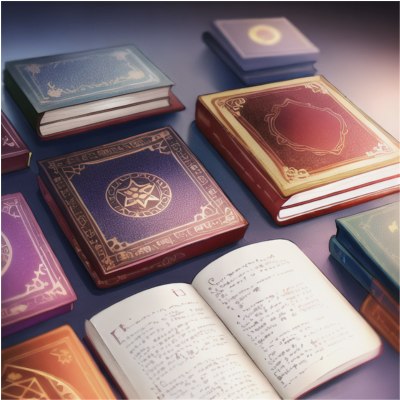
According to the legend, each of the Nine Unknown Men was entrusted with a single book containing highly advanced knowledge in a specific field. These books were said to be continually updated by successive guardians, ensuring that the information remained accurate while staying hidden from the public.
Although there is no universally accepted list, the version popularized in the 20th century describes the books as covering the following subjects:
1. Psychology and Propaganda
The first book allegedly explored the science of influencing human behavior. It described methods of persuasion, mass psychology, and the power of symbols and language to shape public opinion. According to the legend, this knowledge could be used either to maintain peace or manipulate entire populations or for psychological warfare strategies.
2. Physiology
The second book was said to contain advanced knowledge of the human body, including techniques for healing injuries, improving physical performance, and even disabling an opponent with minimal force. Some versions claim it explained how pressure points could affect the nervous system, which demonstrated how to murder someone merely by touching them, a technique known as “The Touch of Death,” which involves reversing a nerve impulse. It is also said that a leak from this book resulted in the martial art of Judo.
3. Microbiology
This book supposedly dealt with microscopic life, infectious diseases, and methods of preventing epidemics. Later interpretations suggest it contained medical knowledge far beyond what was known in the ancient world.
4. Alchemy and Metallurgy
The fourth book allegedly described methods for transforming metals and creating powerful alloys. Some stories even claim it contained the secret of transmuting base metals into gold, although this idea is generally associated with later alchemical traditions.
5. Communication
According to the legend, the fifth book focused on communication, including the transmission of information over long distances. Modern writers have interpreted this as anything from advanced linguistics to speculative forms of wireless communication methods, which can be used to communicate with terrestrial and Alien beings, as the Nine Unknown Men were aware of aliens and the outside world.
6. Gravity
The sixth book supposedly explored gravity and the forces governing motion. Some versions of the legend suggest it contained knowledge that could explain levitation or advanced methods of transportation, detailed directions on constructing the Vedic Vimana, or simply an aircraft.
7. Cosmology
The seventh book was said to examine the structure of the universe, astronomy, and the origins of celestial bodies. It allegedly combined observations of the heavens with broader philosophical ideas about the nature of existence.
8. Light
This book reportedly focused on the properties of light and energy. Later authors have speculated that it contained knowledge related to optics or advanced technologies, the speed of light, and how to utilize it as a weapon, although the legend provides few specific details.
9. Sociology
The final book allegedly explored the rise and fall of civilizations, patterns of social organization, and the forces that shape human societies, guidelines for society’s progress, and methods for predicting its destruction. According to the legend, understanding these principles could help maintain stable and prosperous kingdoms.
Different Interpretations of the Nine Secret Books
Over the years, different authors and researchers have described the Nine Secret Books in different ways. Some versions expand on their contents, while others introduce supernatural or highly speculative ideas that are absent from earlier accounts. As a result, there is no universally accepted description of the books. Despite these variations, the central theme remains consistent: the Nine Unknown Men were believed to safeguard powerful knowledge that could benefit humanity if used wisely, or prove dangerous if it fell into the wrong hands.
Talbot Mundy and the Origins of the Modern Story
Talbot Mundy’s The Nine Unknown (1923)
Although the story is associated with Emperor Ashoka, the Nine Unknown Men gained worldwide recognition largely through British author Talbot Mundy. In 1923, Mundy published the novel The Nine Unknown, introducing the mysterious secret society to an international audience and transforming an obscure tale into one of the most enduring mysteries linked to ancient India.
Rather than presenting the story as documented history, Mundy blended historical settings with adventure, mystery, and speculative fiction. His novel imagined the Nine Unknown Men as guardians of extraordinary knowledge who secretly influenced the course of civilization while protecting humanity from dangerous discoveries.
The success of The Nine Unknown inspired later writers, researchers, and enthusiasts to explore the idea further. Over the decades, the story appeared in books, documentaries, and discussions about lost civilizations, hidden knowledge, and ancient scientific achievements. Many of the details commonly associated with the Nine Unknown Men today, including expanded descriptions of the nine secret books, were developed or popularized by later authors rather than ancient historical sources.
While it remains uncertain whether Mundy drew inspiration from older oral traditions, folklore, or earlier writings, his novel unquestionably played the most significant role in bringing the Nine Unknown Men into modern popular culture. Today, nearly every discussion of the secret society can be traced, directly or indirectly, to the renewed interest generated by his work.
The Morning of the Magicians and Later Writers
Interest in the Nine Unknown Men continued to grow throughout the twentieth century. In 1960, French authors Louis Pauwels and Jacques Bergier discussed the mysterious society in their influential book The Morning of the Magicians. Blending history, philosophy, science, and speculative ideas, the book suggested that the Nine Unknown Men may have preserved advanced knowledge for centuries.
Although many of the book’s claims remain controversial and are not supported by historical evidence, it played a significant role in expanding the mystery beyond Talbot Mundy’s novel. Its popularity introduced the Nine Unknown Men to a wider international audience and inspired decades of discussion about hidden civilizations, forgotten technologies, and ancient scientific knowledge.
Modern Fiction Inspired by the Nine Unknown Men
The mystery of the Nine Unknown Men continues to inspire modern writers, particularly in historical thrillers that combine ancient history with mystery and adventure.
One of the best-known examples is Christopher C. Doyle’s The Mahabharata Secret (2013), which weaves together Indian mythology, historical mysteries, and the idea of a hidden brotherhood protecting dangerous knowledge. While the novel draws inspiration from the legend, it is presented as a work of fiction.
Similarly, Sapan Saxena’s Finders, Keepers (2015) incorporates the Nine Unknown Men into a modern conspiracy thriller, imagining the secret society as guardians of ancient knowledge whose influence extends into the present day.
These novels demonstrate how the story has evolved far beyond its early literary origins. Although fictional, they have introduced the Nine Unknown Men to a new generation of readers and helped keep one of India’s most enduring mysteries alive in contemporary popular culture.
Historical Evidence: Did the Nine Unknown Men Really Exist?
The legend of the Nine Unknown Men has fascinated historians, writers, and mystery enthusiasts for generations. However, separating historical fact from later tradition requires examining the surviving evidence from Emperor Ashoka’s reign and the records left by ancient historians.
While Ashoka’s life and rule are well documented, the evidence for the Nine Unknown Men is far less conclusive. Modern historians generally distinguish between the verified history of the Mauryan Empire and the later stories that describe a secret society preserving advanced knowledge.
The Ashokan Edicts
The most important historical sources from Ashoka’s reign are the Ashokan Edicts, a collection of rock and pillar inscriptions issued during the 3rd century BCE. These inscriptions describe Ashoka’s transformation after the Kalinga War, his adoption of Dharma, his policies of religious tolerance, and his efforts to promote peace and public welfare throughout the Mauryan Empire.
Because the edicts were commissioned during Ashoka’s lifetime, historians regard them as the most reliable primary sources for understanding his reign.
Significantly, none of the surviving edicts mention the Nine Unknown Men, a secret society, or nine scholars entrusted with preserving dangerous scientific knowledge. While the absence of evidence does not automatically disprove the legend, it means there is no contemporary record supporting its existence.
Buddhist Texts and Historical Records
Several ancient Buddhist texts, including the Mahavamsa, Dipavamsa, and Ashokavadana, describe Ashoka’s conversion to Buddhism, his support for monasteries, and the spread of Buddhist teachings across Asia. Greek accounts of the Mauryan Empire and later Indian historical traditions also provide valuable information about Ashoka’s administration and legacy.
Despite discussing many aspects of his reign, none of these early sources refer to the Nine Unknown Men or a secret organization responsible for safeguarding advanced knowledge. Likewise, archaeological discoveries from the Mauryan period have not produced evidence confirming the existence of the society or the alleged Nine Secret Books.
What Do Modern Historians Say?
Most modern historians consider the Nine Unknown Men to be a literary tradition rather than a documented historical institution. Although the story may have been influenced by older folklore or oral traditions, no verified ancient manuscript or contemporary historical record has been found that confirms the existence of the secret society.
The story gained international recognition after Talbot Mundy’s 1923 novel The Nine Unknown, while later writers such as Louis Pauwels and Jacques Bergier expanded the mystery through speculative works, including The Morning of the Magicians (1960). Over time, additional claims involving hidden technologies, advanced sciences, and lost civilizations became closely associated with the Nine Unknown Men.
Today, the historical consensus remains clear: Emperor Ashoka was a real ruler whose achievements are supported by substantial historical evidence, whereas the Nine Unknown Men remain an enduring mystery supported primarily by later literary works, folklore, and speculative traditions rather than contemporary historical records.
Claims and Stories Associated with the Nine Unknown Men
Although historians have found no contemporary evidence confirming the existence of the Nine Unknown Men, the secret society has inspired numerous stories, theories, and extraordinary claims over the past century. These accounts originate primarily from later books, speculative writings, folklore, and popular culture rather than verified historical records. While none of these claims have been conclusively proven, they continue to fuel the enduring fascination surrounding Ashoka’s mysterious secret society.
Pope Sylvester II and the Talking Bronze Head
One of the earliest stories linked to the Nine Unknown Men involves Pope Sylvester II (c. 946–1003), a renowned scholar who was widely admired for his knowledge of mathematics, astronomy, and mechanical devices. According to later legends, the pope traveled to the East, where he encountered the descendants of the Nine Unknown Men and gained access to their hidden knowledge.
The story claims that he constructed a mysterious talking bronze head capable of answering questions with simple “yes” or “no” responses. Some modern writers have compared the device to an early binary system or primitive artificial intelligence. However, historians have found no reliable evidence connecting Pope Sylvester II to the Nine Unknown Men, and the story is generally regarded as medieval folklore that was later associated with the legend.
Alexandre Yersin and the Cure for Plague and Cholera
Another popular claim involves Swiss-French physician Alexandre Yersin, who is credited with identifying the bacterium responsible for the bubonic plague. According to the legend, Yersin traveled to India in the late nineteenth century and encountered descendants of the Nine Unknown Men, who allegedly shared advanced medical knowledge that contributed to treatments for plague and cholera.
Despite the popularity of this story, no historical records, personal writings, or scientific publications by Yersin mention such an encounter. Historians attribute his discoveries to years of scientific research rather than secret teachings.
The Mystery of the Ganges River
French author Louis Jacolliot suggested that the remarkable purity traditionally associated with the Ganges River might have been the result of forgotten ancient technology. According to his theory, the Nine Unknown Men developed a method of sterilizing water using radiation generated from a hidden temple beneath the river.
Although this idea has attracted attention in mystery literature, it has never been supported by archaeological discoveries or scientific evidence. Modern studies of the Ganges focus on natural environmental and microbiological factors rather than hidden technology.
Anti-Gravity and Advanced Space Travel
Among the most extraordinary claims is the belief that one of the Nine Secret Books contained knowledge of gravity, aerodynamics, and interstellar travel. Some versions of the story suggest that the guardians understood principles that could allow objects to overcome gravity, while others link the books to ancient Indian concepts such as Laghima, a mystical ability described in certain yogic traditions.
These ideas are often connected with later interpretations of Vaimānika Shāstra, a controversial Sanskrit text that claims to describe ancient flying machines known as Vimanas. However, scholars generally consider the text a modern composition rather than an authentic ancient scientific manuscript, and there is no historical evidence linking it to Emperor Ashoka or the Nine Unknown Men.
The Amsu Bodhini Palm Leaves
Some writers have associated the Nine Unknown Men with Amsu Bodhini, a Sanskrit manuscript said to contain discussions of solar energy, light, heat, electromagnetism, and other scientific concepts. According to these claims, the manuscript preserves fragments of knowledge once protected by the Nine Unknown Men.
Although the text has attracted considerable interest among researchers of ancient Indian science, no verified evidence connects it to Ashoka’s secret society, and many of the claims surrounding its contents remain speculative.
Nazi Expeditions and Hidden Knowledge
During the twentieth century, another theory emerged suggesting that Nazi Germany sought the knowledge preserved by the Nine Unknown Men. According to the story, Adolf Hitler authorized expeditions to Tibet and parts of Asia in search of ancient wisdom that could provide military or technological advantages.
While Nazi expeditions to Tibet are historically documented, historians have found no credible evidence that they were searching specifically for the Nine Unknown Men or their alleged secret books. The connection appears to have developed through later conspiracy theories rather than documented historical sources.
Why These Stories Continue to Fascinate
Although these stories vary widely in their details, they share a common theme: the belief that powerful knowledge has been carefully preserved by a hidden group throughout history. Whether describing advanced medicine, anti-gravity research, ancient technology, or mysterious inventions, each story reflects humanity’s enduring fascination with lost civilizations and forbidden knowledge.
Today, these accounts remain an important part of the cultural legacy surrounding the Nine Unknown Men. While historians continue to distinguish between documented history and later speculation, the mystery itself has inspired generations of writers, filmmakers, and readers to imagine what secrets such a society might have protected.
Influence on Popular Culture
The mystery of the Nine Unknown Men has inspired writers, filmmakers, and researchers for more than a hundred years. Although there is no historical proof that the secret society existed, the story continues to appear in books, documentaries, podcasts, and online discussions.
The legend is often connected with topics such as ancient knowledge, secret societies, lost civilizations, and unexplained mysteries. Because of this, it has become one of the most popular stories linked to Emperor Ashoka and ancient India.
Whether people see it as history, folklore, or fiction, the Nine Unknown Men continue to spark curiosity and encourage readers to learn more about India’s past.
Conclusion
The Nine Unknown Men of Ashoka remain one of the greatest mysteries connected to ancient India. According to the story, Emperor Ashoka created a secret society to protect powerful knowledge after the Kalinga War. However, no historical records from his time confirm that the society ever existed.
Over the years, the story has grown through books, folklore, and modern fiction. Writers such as Talbot Mundy helped introduce the mystery to readers around the world, while later authors added new ideas and interpretations.
Whether real or legendary, the Nine Unknown Men of Ashoka continue to inspire readers, researchers, and mystery lovers around the world.
Frequently Asked Questions (FAQs)
Who were the Nine Unknown Men?
According to the story, the Nine Unknown Men were nine scholars chosen by Emperor Ashoka to protect powerful knowledge from being misused.
Did the Nine Unknown Men really exist?
There is no historical evidence from Ashoka’s time proving that the Nine Unknown Men existed. Most historians consider them part of a later tradition rather than documented history.
What are the Nine Secret Books?
The Nine Secret Books are said to contain knowledge about subjects such as medicine, psychology, communication, gravity, and warfare. Different versions of the story describe the books in different ways.
Who made the Nine Unknown Men famous?
British author Talbot Mundy made the story popular worldwide through his 1923 novel The Nine Unknown. Later writers and filmmakers helped keep the mystery alive.
Why are the Nine Unknown Men still popular?
The story combines real history with mystery, secret societies, and hidden knowledge. This mix continues to attract readers who enjoy historical mysteries and ancient legends.
Also Read:
The Kalinga War: A Turning Point in Ancient Indian History
Sources
- Sood, T. (2020, November 26). The Mystery Behind the 9 Unknown Men. Softpedia Voices.
- S. (2014, April 30). Ashoka’s Secret Society of Nine Men. Sanskriti – Hinduism and Indian Culture Website.
- Wikipedia contributors. (2022, February 5). The Nine Unknown. Wikipedia.
- Anwar, S. (2017, September 19). सम्राट अशोक के नौ अज्ञात पुरुषों के पीछे का रहस्य. Jagranjosh.com.
- Neal Wilgus The Illuminoids New York, Pocket Books 1978 pp.95-6
- “My book ‘Nine’ is a mix of facts and fiction: Shobha Nihalani.” News18. July 9, 2013.
- Weiland, Jonah (2007-04-30). “Behind the Eclipse: ‘Heroes’ Week 20”. Comic Book Resources.
- Taves, Brian (2006). Talbot Mundy, philosopher of adventure: a critical biography. Jefferson, N.C: McFarland & Company. ISBN 0-7864-2234-3.
- Gupta, J. P. (2021, July 1). 2000 साल पहले सम्राट अशोक ने एक सीक्रेट सोसाइटी बनाई थी, जो आज भी कर रही है काम. ScoopWhoopHindi.
- Butler, E. M. (1948). The Myth of the Magus. Cambridge University Press. p. 157.
- The team, P. (2017, May 19). The discovery of Gravitational force. Prachodayat. It was retrieved on March 9, 2022.
- Alexandre Yersin: Plague Conqueror and White Colonizer. (2021, August 20). Fiction and Film for Scholars of France.
- Hindu Wisdom – Women in Hinduism. (n.d.). Hindu Wisdom. Retrieved March 9, 2022, from http://www.hinduwisdom.info/Women_in_Hinduism.htm
- Schwarz, R. (2021, May 4). Vaimānika Shāstra: The Curious History of the Ancient Indian Flying Machines. Stranger Dimensions.
- Verma, V. (2021, October 15). Ancient Sanskrit Texts Reveal That Beings From Other Planets Visited Earth 6000 Years Ago. How and Why’s.
- McKay, A. (2001, March 1). Hitler and the Himalayas: The SS Mission to Tibet 1938–39. Tricycle: The Buddhist Review.
FACT CHECK: We strive for accuracy and fairness. But if you see something that doesn’t look right, please Contact us.
DISCLOSURE: This Article may contain affiliate links and Sponsored ads, to know more please read our Privacy Policy.
Stay Updated: Follow our WhatsApp Channel and Telegram Channel.











Ami ai nine books knowledge arjon krte pari ?
It is difficult to prove/disprove conclusively the facts about Ashoka’s nine men. Talbot Mundy wrote a fictitious novel, it is a fantasy story. But he was himself associated with a secret society called Ancient Order of Freesmiths. That society claims to be custodians of ‘certain secret wisdom received from the Chera dynasty round about the year 700 CE’. We can conclude that probably Mundy wrote a bit of fantasy but admixed with grains of truth. Obviously he would not be keen to reveal the actual details of the nine jewels. Albert Einstein, Sir Isaac Newton, and others have links to Freesmiths as well. So it is possible their ‘discoveries’ are linked to wisdom trickled from Ashoka’s nine jewels. Freesmiths give a scant overview of their history at https://freesmiths.org which lines up on many points with the story about the nine jewels, or nine men, of Ashoka. All of it very fascinating to ponder.
Freesmiths have been proved one and the same secret society of nine although they do not openly admit the same. Everyone posting about them eventually gets deleted. I wonder why.